Post by : Saif
Al-Najjar
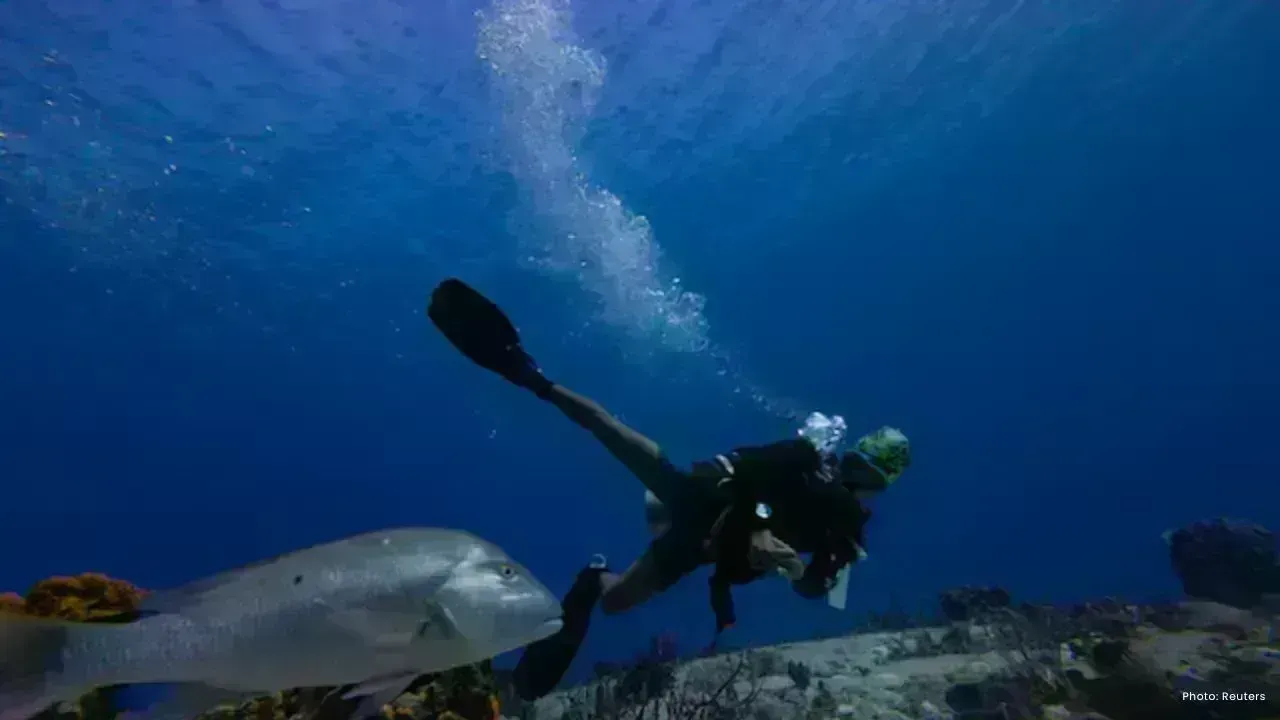
A groundbreaking international agreement aimed at safeguarding ocean ecosystems officially came into force on Saturday, marking a pivotal moment for marine conservation. The United Nations biodiversity treaty, referred to as Biodiversity Beyond National Jurisdiction, establishes concrete rules to protect marine environments in international waters, targeting the conservation of 30 percent of the world's oceans by the year 2030.
This treaty encompasses the high seas, areas that fall outside the jurisdiction of any nation. These waters constitute nearly two-thirds of the global oceans and nearly half of the Earth's surface. Until recently, legal protection for these regions was scarce, even as they faced significant dangers from overfishing, pollution, and climate change.
After nearly 15 years of challenging negotiations, the treaty was finalized in March 2023 and became legally binding following the ratification by at least 60 countries, a milestone achieved in September the previous year. Over 80 countries have since joined, including major players like China, Brazil, and Japan, although some significant nations, such as the United States, have yet to complete the ratification process.
The treaty enables nations to set up marine protected areas in international waters, imposing restrictions on harmful activities and aiding in the restoration of vulnerable ecosystems like coral reefs, deep-sea environments, and key marine breeding grounds. Experts highlight that this marks the first instance of a robust legal framework governing the high seas with a focus on conservation.
According to treaty provisions, countries are required to conduct environmental impact assessments prior to approving actions that might endanger ocean habitats, including fishing, shipping, and other commercial activities. Additionally, the treaty introduces guidelines for equitably sharing benefits derived from marine genetic resources utilized in fields such as medicine, cosmetics, and biotechnology.
While environmentalists regard the treaty as a potent instrument for conservation, they caution that significant efforts lie ahead. In order to achieve the ambitious “30 by 30” goal, over 190,000 marine protected zones need to be established. Currently, only about 8 percent of the oceans enjoy protection, highlighting a substantial gap that must be closed in the coming years.
Although the treaty has garnered widespread acclaim, it does not cover every oceanic threat. For instance, deep-sea mining, deemed a serious risk by many scientists, is overseen by a distinct international body, limiting the treaty's power to regulate mineral extraction from the ocean floor.
Nonetheless, experts assert that this agreement conveys a significant message regarding the shared responsibility of global ocean protection. As the demand on marine resources continues to escalate, the treaty's efficacy will rely on the genuine commitment of nations to their pledges and their prompt action to safeguard vulnerable marine regions.
In an era marked by climate change and human-induced harm, the treaty symbolizes hope that collective efforts can preserve oceanic life for future generations. Its success will hinge on international collaboration, stringent enforcement, and the political will to prioritize nature.


 English