Post by : Saif
Al-Najjar
Japan faces a challenging stance in the East China Sea as tensions escalate with China. In a discreet yet impactful move, Japanese authorities have requested local fishermen to avoid the waters surrounding the disputed Senkaku islands, concerned that even minor incidents could lead to a serious clash with Beijing.
The Senkaku islands, referred to as the Diaoyu islands in China, consist of uninhabited rocks under Japanese control but also claimed by China. For many years, these islands have been a key point of conflict between the two nations. Japanese fishermen have traditionally worked close to these islands to fish and assert Japan's territorial claims. Nationalist factions in Japan view these fishing activities as affirmations of sovereignty.
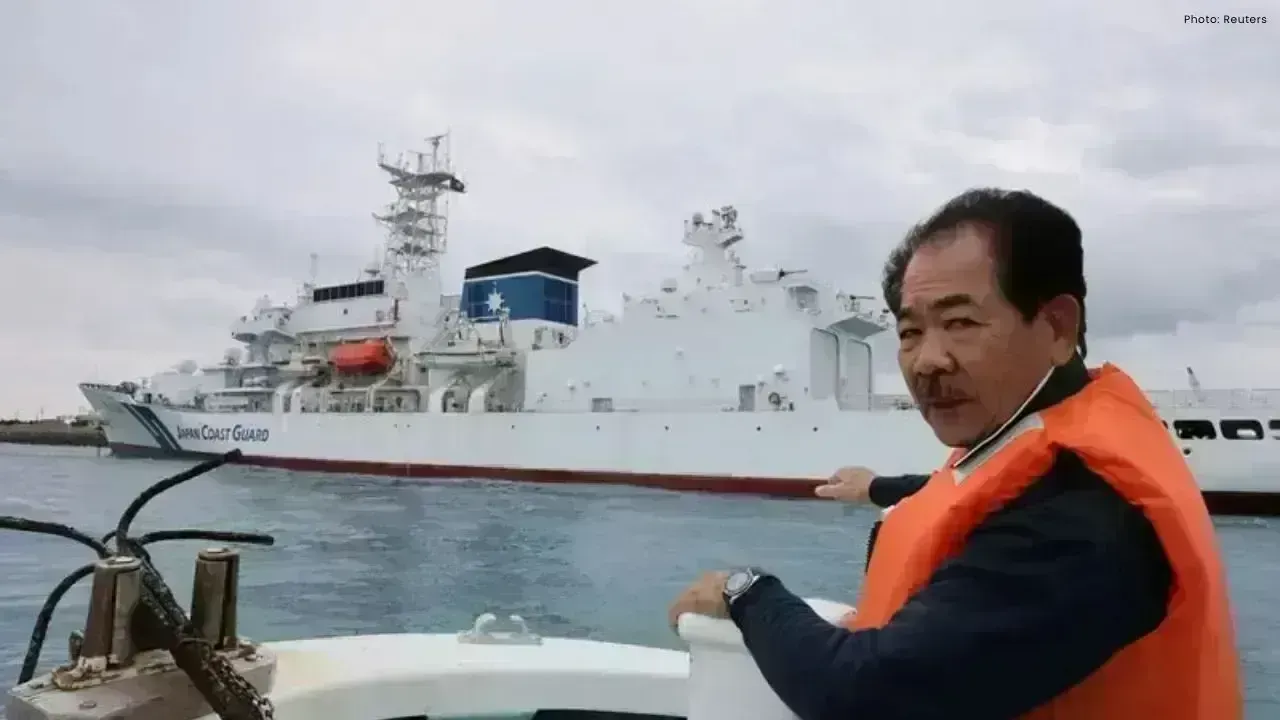
One local fisherman, 76-year-old Hitoshi Nakama from Ishigaki, has spent a lifetime fishing around these islands, seeing himself as a guardian of Japan’s territorial integrity. He recalls encounters with Chinese coast guard ships, where navigating away from potential conflict became a daily challenge.
However, reports indicate a shift since late last year. Fishermen like Nakama have been advised by Japanese officials to forgo trips to the islands, marking a clear change in stance compared to previous years where such activities were tolerated.
This shift aligns with deteriorating relations between Tokyo and Beijing. In November, remarks by Prime Minister Sanae Takaichi regarding Japan’s potential response to a Chinese attack on Taiwan provoked a strong diplomatic backlash from China. Reports also suggest U.S. President Donald Trump urged Takaichi to ease tensions, although the exact influence on Japan's requests remains uncertain.
Japanese officials haven't explicitly confirmed these advisories. The foreign ministry maintains that the islands are integral to Japan’s territory and continues diplomatic protests against Chinese incursions. However, the discreet nature of these requests indicates unease within the government.
Japan faces a challenging dilemma. Allowing fishermen to operate near the islands reinforces claims of sovereignty but raises the risk of confrontations with increasingly assertive Chinese coast guard ships. A confrontation could escalate quickly into an international incident.
Some fishermen have altered their plans in response. Another Ishigaki fisherman, Kazushi Kinjo, mentioned receiving multiple calls from officials prompting him to avoid the islands just prior to a planned trip last November. Although he passed through the waters briefly, he abstained from fishing in that area.
In December, the message from Tokyo became further distilled when Finance Minister Satsuki Katayama met Nakama directly. Although not instructing him to cease fishing near the islands, her caution that “small incidents can grow larger and lead to war” resonated, prompting Nakama to understand the government’s underlying message.
Local leaders echo these sentiments, with Ishigaki’s mayor expressing the need to prevent scenarios where a fisherman could be detained by China, which would escalate tensions and necessitate diplomatic efforts.
China accuses militant Japanese factions of using fishing as a means of provocation. Meanwhile, Beijing insists that maritime disputes should be resolved through dialogue, even as it expands coast guard operations in the region, engaging with neighboring states like the Philippines.
Historical incidents highlight the precarious nature of the situation. A diplomatic crisis erupted in 2010 due to a collision between Chinese and Japanese vessels in the vicinity of the islands. Relations soured further in 2012 when Japan nationalized portions of the islands.
Today, Japan aims to avoid a repeat of such crises. While advising fishermen to avoid the islands may mitigate immediate risks, it raises concerns that retreating could embolden China to intensify its territorial claims. The Senkaku issue remains a volatile flashpoint, with even slight actions at sea posing significant potential outcomes beyond the immediate maritime context.


 English