Post by : Shweta
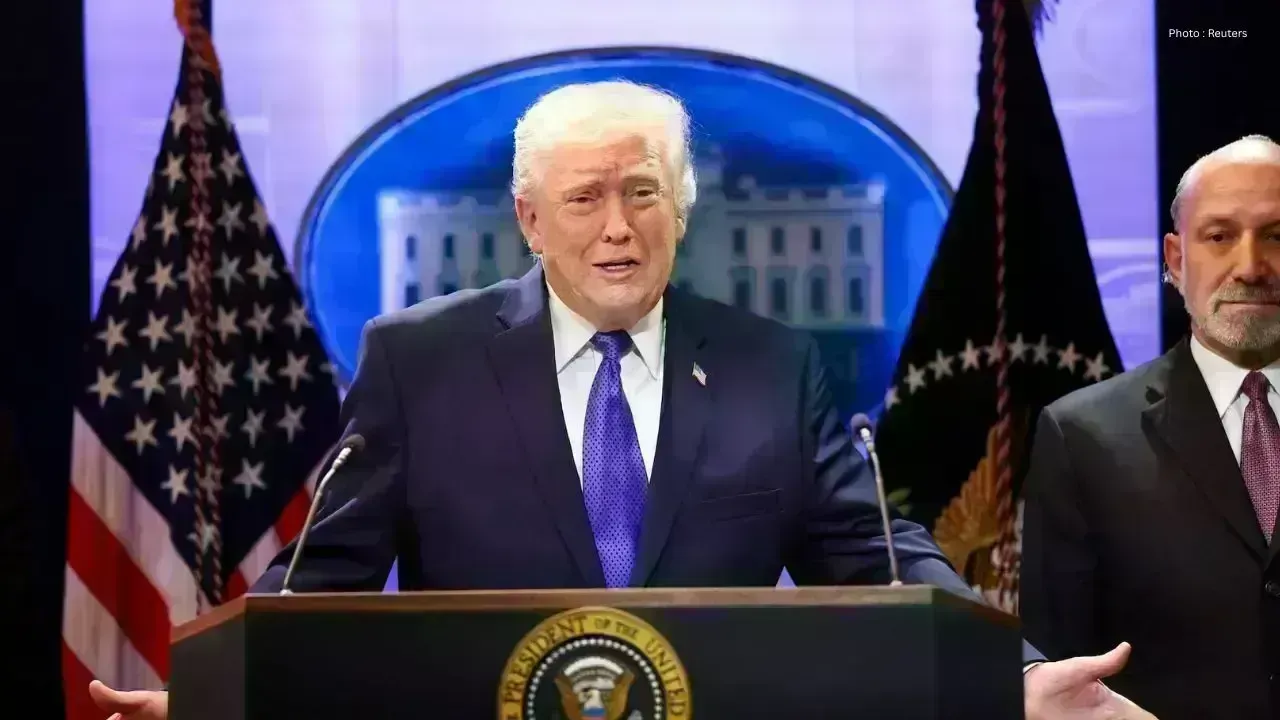
The Trump administration is encountering significant backlash for its incorporation of religious language in the context of the ongoing military tensions with Iran. Analysts caution that invoking faith in the justification of military actions risks merging political agendas with the domain of religion, which could threaten longstanding democratic principles in the United States.
In recent weeks, various senior officials, including Defense Secretary Pete Hegseth, have woven religious references into their public remarks regarding the conflict. Reports suggest that Hegseth has drawn upon scriptural texts during briefings, framing American forces in a spiritual light. Meanwhile, President Trump has attracted scrutiny for social media posts that appear to position him in religious symbolism.
Vice President JD Vance has joined the fray by openly disputing comments made by Pope Leo XIV, who cautioned against the misuse of religion as a justification for violence. This exchange underscores ongoing tensions within the U.S. and their reverberations in the international community as various global religious and political figures react to this rhetoric.
While past American presidents have historically invoked faith during wartime, experts note that they have usually refrained from framing military engagements as religious endeavors. For example, George W. Bush modified his language after noting concerns that such religious framing could exacerbate tensions in regions like the Middle East.
Critics argue that defining military action in religious context reinforces narratives often exploited in global conflicts, where battling factions assert divine endorsement. This has been prevalent in numerous areas, including Iran, where authority figures have commonly used religious justifications in both political and military messaging.
Domestic issues arise too, as observers warn that overt religious messaging from government officials may threaten the principle of separating church and state. In a diverse society like the U.S., such rhetoric could alienate numerous citizens who are either non-religious or follow different faiths.
Supporters of the current administration contend that such expressions of faith are woven into American tradition, embodying the personal beliefs of both leaders and citizens. Nevertheless, critics assert that the overt politicization of religion marks a departure from established norms and could produce lasting ramifications.
This debate arises amid a complex geopolitical landscape, with analysts warning that the introduction of religious narratives into wartime discourse may further complicate diplomatic relations and amplify misunderstandings internationally.
Ultimately, this controversy embodies a larger discussion on the intersection of religion and politics, questioning whether its application in wartime fosters national unity or further intensifies societal divides both domestically and globally.


 English