Post by : Saif
Al-Najjar
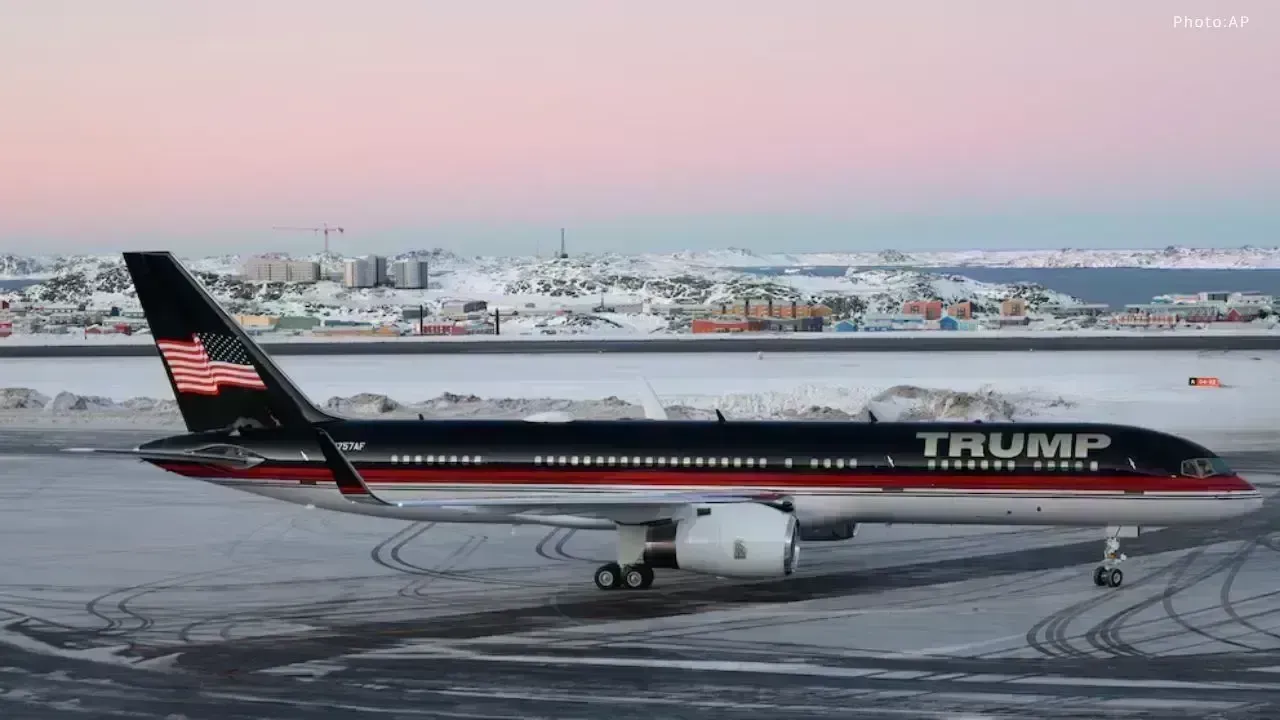
The United States, led by President Donald Trump, has turned its attention toward Greenland, a mineral-rich island that serves as a semi-autonomous territory of Denmark. Trump has persistently pushed for U.S. control over Greenland, even suggesting that military action might be considered should negotiations falter. He recently claimed, “Something will happen on Greenland, whether they like it or not.”
Greenland, the world’s largest island, spans a vast area but has a modest population of approximately 57,000. Lacking its own military, it relies on Denmark for defense. A forcible attempt by the U.S. to take control could spark a grave crisis within NATO, potentially jeopardizing the alliance. Danish officials, including Prime Minister Mette Frederiksen, have indicated that such an action would be intolerable, with many Greenlanders expressing a strong preference against joining the U.S.
Military intervention is widely regarded by experts as both unnecessary and precarious. The U.S. already maintains a significant presence in Greenland under a defense agreement established in 1951. The Pituffik Space Base in northwestern Greenland supports critical missile defense and space surveillance operations. Enhanced U.S. military activity could occur without straining relations with Denmark or NATO, as it falls within the established agreement.
A more feasible strategy may involve diplomatic negotiations. Options such as purchasing Greenland have been dismissed by Danish and Greenlandic authorities, who assert that the island is not for sale. Alternatively, a security arrangement similar to those under the U.S. Compact of Free Association with Pacific islands like Palau and Micronesia could be considered. These agreements allow for U.S. military operations in exchange for economic aid.
Experts caution that efforts to sway Greenlandic public opinion to support U.S. control are likely to fail. The small, linguistically unique population of Greenland is deeply attached to its autonomy. Integrating Greenland into the U.S. would also incur considerable expenses, as Greenlanders currently benefit from Danish citizenship and access to various welfare services, including free healthcare and education. Replicating such systems would pose significant challenges.
Ultimately, while Greenland presents strategic opportunities for the U.S., the implications of military, political, and social factors render a takeover improbable. Experts advise focusing on fortifying existing agreements to sustain a robust U.S. military presence while honoring Greenland’s autonomy and Denmark’s governance. This strategy would serve U.S. interests in the Arctic without provoking international strife or undermining NATO.
The Greenland situation raises broader issues regarding U.S. Arctic policy and the essential balancing act between strategic objectives, local rights, and international norms. Unilateral actions could alienate the U.S. from allies and lead to long-term economic and political repercussions.


 English