Post by : Bianca
Haleem
The United States is preparing to deploy a new anti-drone system in the Middle East to strengthen defenses against Iranian drones. The system, called Merops, has already been tested against Russian drones in Ukraine and is expected to improve the ability of U.S. forces to intercept small unmanned aircraft.
According to two U.S. officials who spoke to the Associated Press on condition of anonymity, the decision comes amid growing concerns about possible Iranian retaliation across the region following recent U.S. and Israeli strikes.
While the United States has successfully used advanced missile defence systems such as Patriot and THAAD to intercept Iranian missiles, officials say there are still limited effective systems in the Middle East to counter drones. These drones are harder to detect and cheaper to produce, making them a growing security challenge.
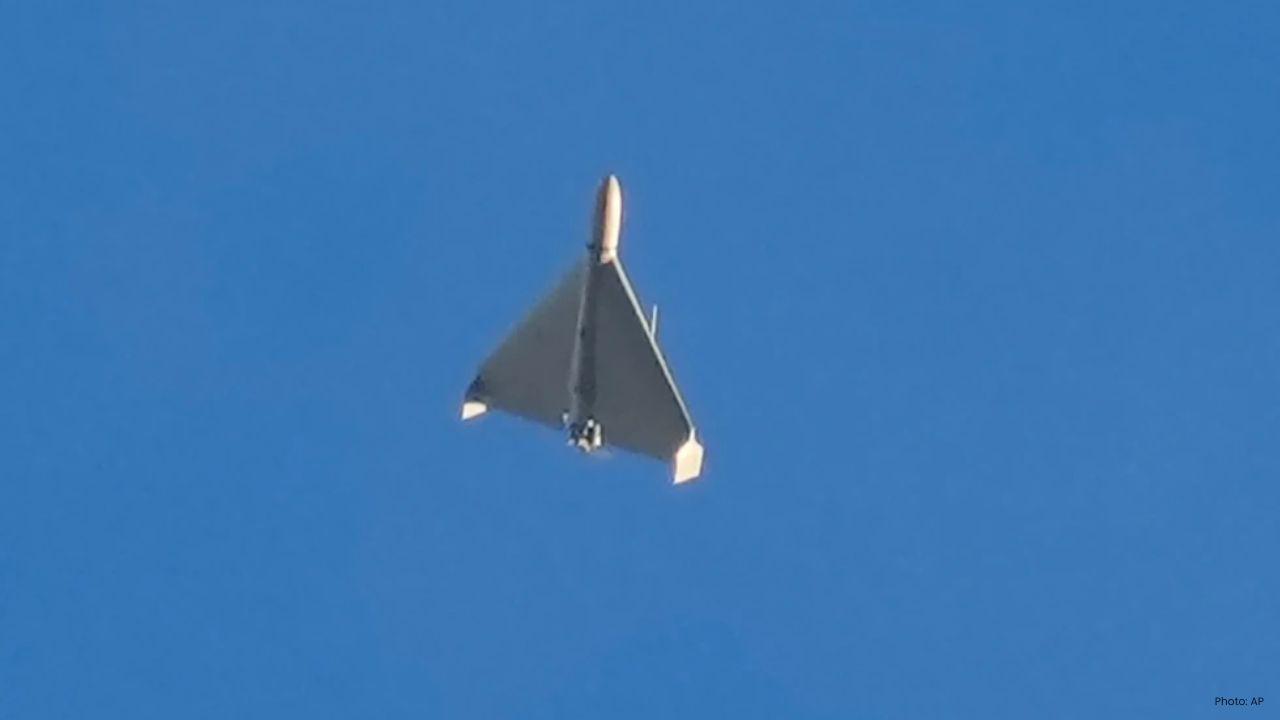
One official admitted that the U.S. response to Iran’s Shahed drones has been disappointing so far. These drones are simpler versions of those Russia has been using extensively in the war in Ukraine. Russia has been continuously improving these drones, making them more effective on the battlefield.
Why Drones Are a Growing Challenge
Drones are difficult to track on traditional radar systems because those systems are mainly designed to detect high-speed missiles. Smaller drones can sometimes be mistaken for birds or aircraft, which makes interception more difficult.
Another major challenge is the cost difference between drones and the missiles used to destroy them. Many Iranian drones cost less than $50,000, while the missiles used to shoot them down can cost hundreds of thousands of dollars.
U.S. Representative Jim Himes, the top Democrat on the House Intelligence Committee, recently described the situation as a “math problem.” He explained that using expensive missile systems against cheap drones is not a sustainable solution.
How the Merops System Works
The Merops system is designed specifically to intercept drones using other drones. The system launches its own drones to track and destroy incoming hostile drones.
It is small enough to fit in the back of a midsize pickup truck, making it highly mobile. The system also uses artificial intelligence to detect targets and navigate even when satellite signals or electronic communications are jammed.
The system was previously deployed in NATO countries, Poland and Romania in November after Russian drones repeatedly entered NATO airspace during the Ukraine war.
Lessons from Ukraine
U.S. defense officials say the experience of Ukraine has provided valuable lessons in countering drone attacks. Ukrainian forces have been dealing with large numbers of Russian drones, many of which are Iranian-designed Shahed drones.
Ukrainian President Volodymyr Zelenskyy recently said that the United States had asked Ukraine for assistance in tackling Iranian drones. Although he did not specify the type of support, officials confirmed that the Merops system is part of the broader effort to improve drone defenses.
Deployment Plans in the Middle East
The Merops systems will be deployed to several locations across the Middle East, including areas where U.S. forces are not directly present. Most of the systems will be provided by Perennial Autonomy, the manufacturer backed by former Google CEO Eric Schmidt.
U.S. officials said the deployment will not affect existing defense systems currently stationed in Europe.
Meanwhile, Pentagon officials have told lawmakers in private briefings that stopping large waves of Iranian drones remains a challenge. U.S. Defense Secretary Pete Hegseth said that while the U.S. has strengthened defenses, it is impossible to stop every attack.
Industry experts also believe the U.S. must speed up the development and deployment of advanced counter-drone technologies to protect military bases and civilian populations without relying on extremely expensive missile systems.


 English