Post by : Shakul
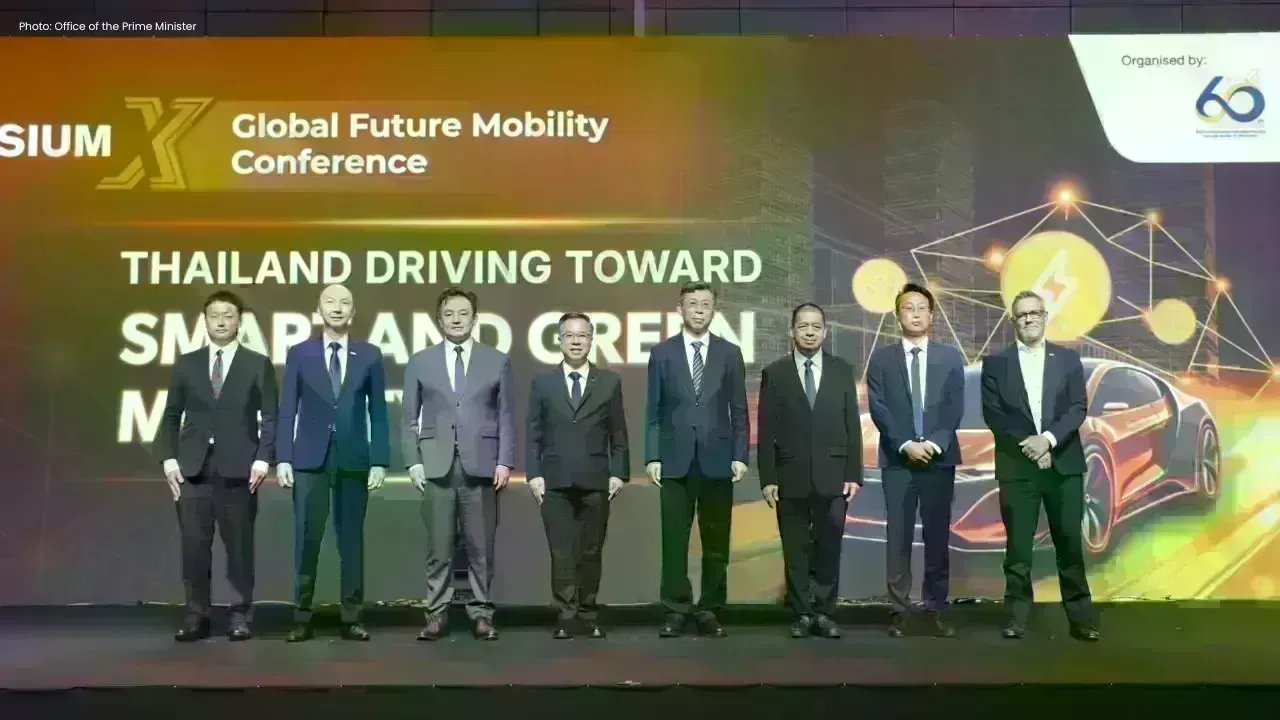
Thailand is intensifying its efforts to become a key regional center for smart and green mobility through strategic partnerships with prominent electric vehicle manufacturers and tech firms from China, Japan, and Europe. The Board of Investment (BOI) recently conducted the “Thailand Driving Toward Smart and Green Mobility” symposium during SUBCON Thailand 2026 in Bangkok, gathering global automotive leaders, investors, and industry specialists to explore the future landscape of the EV industry and cutting-edge automotive technology.
Over 500 participants attended the symposium, including high-ranking officials from China EV100, BYD, Bosch, Isuzu, Autoliv, and other major players in the automotive and tech sectors. The focus was on the worldwide transition towards electric vehicles, smart transport systems, clean energy solutions, and advanced technologies such as artificial intelligence, autonomous driving, and digital mobility platforms.
BOI Secretary-General Narut Teodsathirasak emphasized that Thailand is not just keeping pace with global automotive trends but is instead steering the future of the industry in Southeast Asia. He mentioned that the automotive field is entering the ACES era, encompassing Autonomous, Connected, Electric, and Shared Mobility technologies. According to him, software development, battery management, electronics, and intelligent driving systems are becoming essential for competitiveness in today’s automotive landscape.
The Thai government remains committed to encouraging investment in electric vehicles and related sectors, which bolsters energy security and provides long-term economic resilience. From 2017 up until March 2026, investment promotion applications in the EV sector surpassed 182 billion baht, covering areas such as electric vehicle manufacturing, battery production, charging infrastructure, and advanced automotive components. This affirms Thailand's rising stature as a prominent EV production hub in ASEAN.
Industry experts at the symposium pointed to the necessity of developing a robust EV ecosystem in Thailand. They highlighted the need for expanding charging infrastructure, modernizing manufacturing processes, enhancing clean energy utilization, and cultivating a highly skilled workforce to facilitate the next stage of automotive transformation. Several executives also underscored the importance of deeper collaboration between tech firms, energy providers, and automobile manufacturers.
BYD Auto Thailand representatives noted that increasing energy costs and global fuel issues are accelerating the country’s transition to electric mobility. They urged the Thai government to maintain support for Plug-in Hybrid Electric Vehicles (PHEVs) as they assist local parts suppliers in adapting more effectively to emerging technologies while preserving the resilience of Thailand’s automotive supply chain.
Executives from Bosch and Autoliv conveyed that software, electronics, artificial intelligence, and smart safety systems are swiftly evolving the global automotive sector. They indicated that Thailand’s manufacturing capabilities and supplier network are strong, but further investments in cutting-edge technology and innovation are necessary to preserve competitiveness in the international arena.
President of China EV100 Zhang Yongwei projected that by 2030, electric vehicles may represent around 45 percent of global vehicle sales. He articulated that EVs are evolving beyond mere transportation, transforming into technology platforms that integrate artificial intelligence, clean energy, and connected mobility systems. He noted that international cooperation in battery tech, semiconductors, autonomous driving, and software development will play a vital role in shaping the automotive sector's future.
The Thai government asserts that advancing smart and green mobility will significantly contribute to sustainable economic growth, energy stability, and environmental preservation. Officials also mentioned aspirations for Thailand to become a key manufacturing hub for next-generation vehicles, facilitating stronger integration of Thai businesses into global supply chains in the upcoming decade.


 English