Post by : Anis
Al-Rashid
Innovating the Workplace Landscape
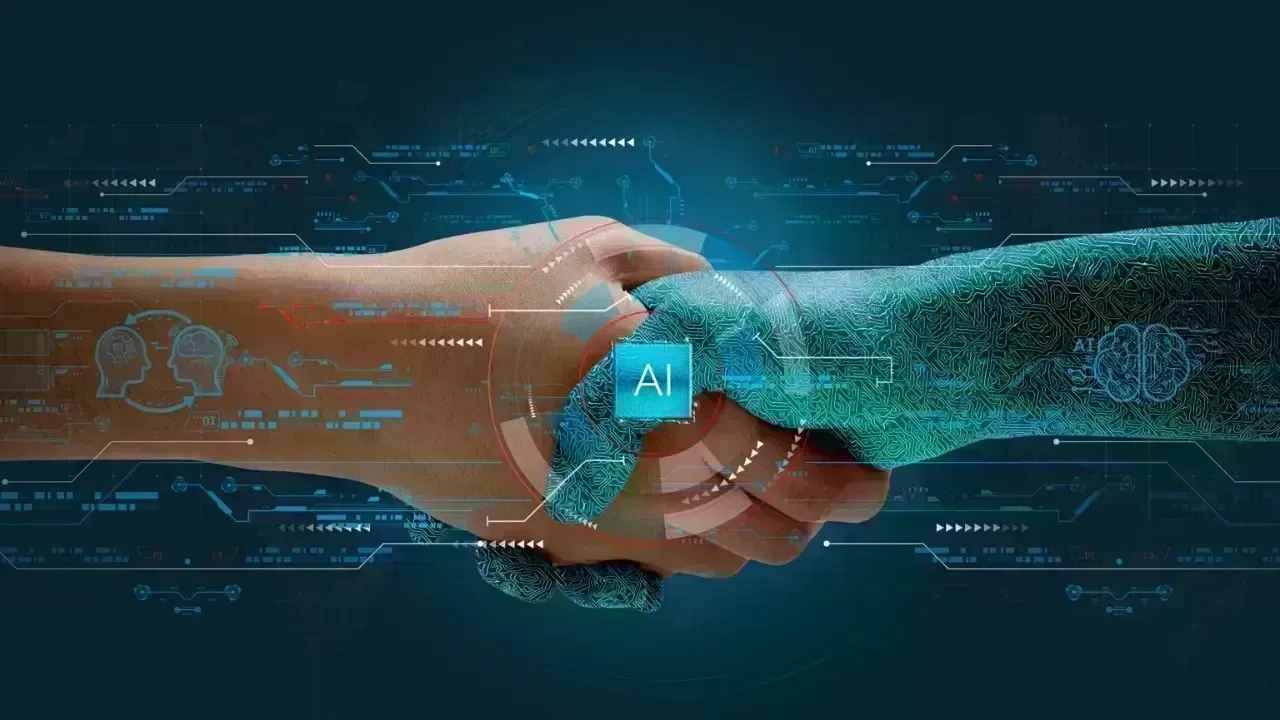
The rapid advancements in artificial intelligence (AI) are fundamentally altering the landscape of work. Traditionally limited to specific tasks, AI has evolved into a key collaborator in daily operations. Recent studies from organizations like Nasscom and Indeed suggest that by 2027, human-AI collaboration will not only change the way work is done but will also define it. This shift is prompting a reevaluation of job roles, hiring methods, and skill development across industries.
The Rise of Human-AI Teamwork
Collaboration Over Automation
AI was once seen merely as a tool used in auxiliary roles, but that perception is shifting. Current findings indicate that AI will integrate into everyday tasks, enabling humans and machines to collaborate effectively on outcomes they couldn't achieve independently.
AI is evolving into a collaborative partner, managing repetitive tasks while enabling humans to engage in creative and strategic thought.
Future Trends by 2027
Deep Integration Into Work Processes
Research shows that an impressive 97% of HR leaders anticipate a seamless integration of humans and AI by 2027. This suggests that AI will become a routine component across various sectors—from software to customer support.
Job descriptions won't just shift to include AI; they will be entirely redefined.
AI's Current Role
It's reported that 20-40% of tasks in tech companies are already performed with AI assistance. Within software development, AI contributes to nearly 45% of coding work.
From code generation to quality assurance, AI is increasingly taking over repetitive tasks, allowing human workers to concentrate on high-level planning and creative endeavors.
Evolution of Job Design
Outcome-Focused Roles
Job functions are shifting from task execution to outcome delivery. In human-AI collaborative environments, employee performance will measure not just task completion but also the value derived from innovation and leadership. AI will handle data-driven tasks, freeing humans to utilize creativity and ethical decision-making.
The Role of Humans Remains Crucial
Despite AI's advancements, human oversight is still essential. Over half of HR leaders acknowledge that validation and refinement of AI outputs are crucial for ensuring quality and ethical standards.
This guarantees that positions in strategic leadership, system design, and innovative problem-solving will gain relevance, highlighting the need for human judgment that AI cannot replicate.
Shifting Hiring Paradigms
Emphasis on Skills
With AI embedded in workflows, hiring criteria are evolving. Traditional qualifications are being overshadowed by skills-based assessments, focusing on demonstrable abilities rather than mere credentials.
Around 85% of hiring managers prioritize practical skills, emphasizing the necessity of combining technical and soft skills.
Need for Continuous Learning
Reskilling and upskilling have become essential. As AI automates routine jobs, workers must develop competencies beyond AI’s reach. Organizations are focused on training to prepare employees for integrated roles that blend human creativity with AI efficiency.
Sector-Specific Effects of Human-AI Collaboration
Impact on Technology
The technology sector leads AI integration, with AI handling over 40% of coding tasks. This shift pushes developers towards roles that focus on guiding AI, ensuring quality outcomes, and strategizing complex projects.
Professional Services
In fields like finance and consulting, the need for precise decision-making will involve synthesizing AI insights with human judgment. AI analyzes data trends, while industry professionals contextualize findings within moral frameworks.
Daily Operations
AI is transforming daily tasks across various industries, enabling faster decision-making and reducing manual efforts. Predictive analytics, automation, and smart workflows are reshaping traditional roles.
Navigating Opportunities and Challenges
Boosting Productivity
The fusion of human creativity and AI efficiency is unlocking new levels of productivity. While AI accelerates data processing, humans provide the contextual insight necessary for effective decision-making.
Reframing Work Atmosphere
Instead of replacing jobs, AI can reframe tasks. With automation handling repetitive elements, employees can engage in more fulfilling work, potentially boosting job satisfaction and professional growth.
Skills Gaps and Ethics
Despite its potential, AI adoption faces challenges like skills deficits and ethical dilemmas. A disconnect between technology and workforce readiness may impede the transformation unless prioritizing training occurs.
Issues of ethics, data privacy, and transparency also arise as AI impacts sensitive decisions, necessitating frameworks for accountability.
Preparing for the Human-AI Future
Commitment to Skill Development
The workforce must prioritize continual learning. It’s essential for both employers and employees to focus on pathways that enhance AI knowledge, critical thinking, and ethical considerations.
Job Redesign Approaches
Organizations need to restructure roles, allowing AI to manage routine tasks while humans drive strategic direction and creativity. Thoughtful job redesign will benefit productivity and employee well-being.
Building Trust
Trust in AI systems is vital for collaboration. Clear ethical guidelines and open communication are critical. AI should support humans, maintained by policies safeguarding equity and accountability.
Conclusion: A Transformed Work Landscape by 2027
By 2027, work will be reshaped through close collaboration between humans and AI. The future workplace will integrate technology deeply into daily routines, transforming roles and expectations. Humans will focus on areas requiring creativity and judgment while AI will manage efficient processes, completely redefining productivity and innovation in work environments.
Disclaimer:
This article summarizes the insights available on human-AI collaboration and the evolving work landscape. It is meant for informational purposes and does not offer professional advice. AI’s progression and workplace dynamics may vary significantly across various sectors.


 English