Post by : Bianca
Haleem
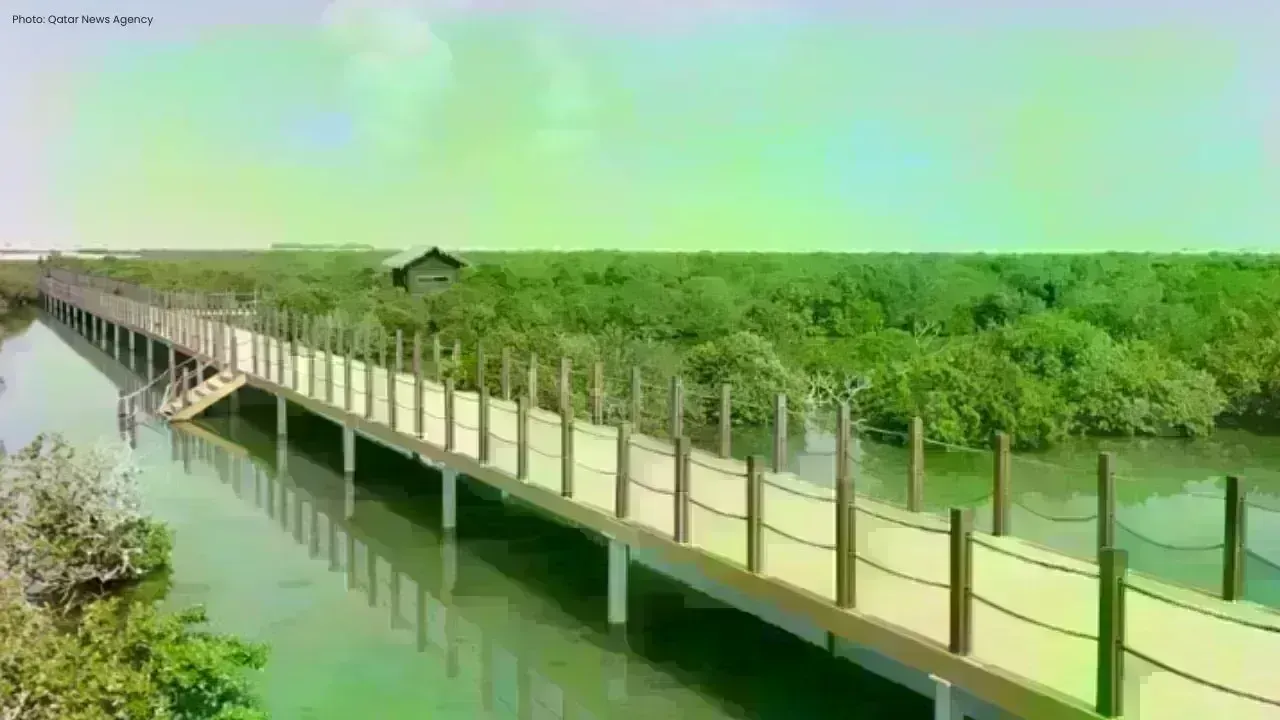
Qatar's Ministry of Environment and Climate Change (MECC) has confirmed that the country's mangrove forests now cover an estimated area of nearly 14 square kilometres. More than 7 square kilometres of this total are located within the Al Thakira Reserve, making it the largest mangrove habitat in the country.
The announcement was made to mark the International Day for the Conservation of the Mangrove Ecosystem, observed every year on July 26. The Ministry also reaffirmed its commitment to protecting existing mangrove forests while expanding plantation programmes in suitable coastal locations.
Read More: Qatar Welcomes Dutch and Belgian Ban on Settlement Products
Mangroves Found in Several Coastal Areas
According to the Ministry, mangrove trees are naturally found in multiple coastal regions across Qatar. These include Al Khor, Al Thakira, Al Wakrah, Mesaieed, Al Aaliya Island, Fuwairit, Al Ruwais, Al Areesh and Al Jumail.
The Ministry said it is working with various national institutions and organisations to safeguard these forests, prevent overuse of mangrove areas and carry out restoration and planting programmes. These efforts are based on scientific studies that evaluate the environmental conditions required for healthy mangrove growth.
Restoration Requires Scientific Planning
Khalid Juma Al Muhannadi, Director of the Wildlife Development Department at MECC, said mangrove conservation goes far beyond simply planting more trees. He explained that successful restoration depends on careful management of mangrove habitats, beginning with selecting suitable sites based on tidal movement, soil quality and salinity levels.
He added that conservation work also includes monitoring seedling growth and regularly assessing restored areas to ensure long-term success.
Al Muhannadi stressed that restoration programmes should not be judged only by the number of seedlings planted. Instead, their success depends on whether the young trees survive, grow naturally and contribute to healthy marine ecosystems.
Protecting Existing Forests While Expanding Carefully
The Ministry said its strategy combines the protection of existing mangrove forests, support for natural regeneration and carefully planned expansion into suitable areas without disturbing the ecological balance of coastal environments.
Al Muhannadi noted that selecting the right location, planting at the correct time and using appropriate planting methods are all essential for successful restoration. He emphasised that all planting projects should be carried out under the supervision of the Ministry.
He also urged individuals and organisations planning mangrove initiatives to coordinate with MECC before starting any project. This helps ensure that selected locations meet approved environmental standards and protects sensitive coastal ecosystems over the long term.
Mangroves Play a Major Role in Climate Change Action
The Ministry highlighted the environmental importance of mangrove forests in tackling climate change. According to global estimates cited by MECC, one hectare of mangrove forest stores carbon equivalent to around 3,754 tonnes of carbon dioxide when both trees and soil are considered.
This large carbon storage capacity makes mangrove ecosystems an important natural resource in efforts to reduce greenhouse gas impacts.
Natural Protection for Coastlines and Marine Life
MECC explained that mangrove forests act as natural barriers that help protect coastlines from erosion while reducing the impact of waves and coastal storms.
The forests also provide essential breeding, nursery and feeding habitats for many fish, shrimp and crustacean species. In addition, they serve as important habitats for both resident and migratory birds, helping maintain rich marine and coastal biodiversity.
Ecotourism and Fisheries Also Benefit
The Ministry said mangrove forests also provide significant tourism and economic value. Areas such as the Al Thakira Reserve have become popular destinations for nature lovers and ecotourism activities.
Mangroves also support fisheries by providing healthy habitats for marine species while helping maintain the ecological balance of Qatar's coastal environments.
Public Asked to Help Protect Mangroves
MECC called on members of the public and visitors to coastal areas to help protect mangrove forests by avoiding damage to the trees, not uprooting plants and ensuring that waste is not discarded in mangrove habitats.
The Ministry said community support is essential for preserving these valuable natural resources for future generations.
What Are Mangroves?
Mangroves are evergreen shrubs that grow in intertidal zones and shallow muddy coastlines. They are highly tolerant of salty conditions and can survive in soils with very little oxygen. Their specialised aerial roots, known as pneumatophores, rise above the water and mud, allowing the plants to absorb oxygen while supporting growth in challenging coastal environments.


 English