Post by : Saif
Al-Najjar
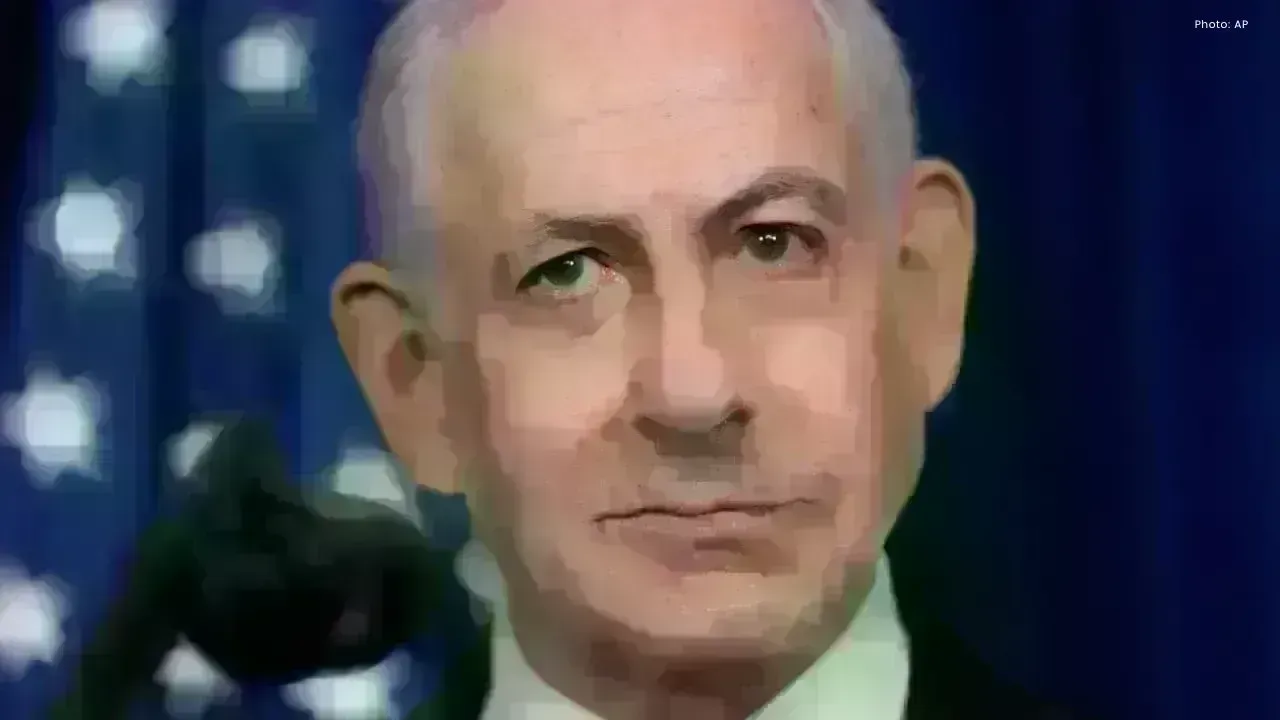
Prime Minister Benjamin Netanyahu of Israel has decided to participate in U.S. President Donald Trump’s newly established Board of Peace for Gaza, reflecting a notable shift in his public position. This follows prior critiques from Netanyahu’s office regarding the board, particularly the committee focused on Gaza.
Initially, the Board of Peace was introduced as a select group of global leaders to oversee a ceasefire strategy for Gaza. However, the concept has since broadened. President Trump has extended invitations to numerous countries, proposing that the board could also address conflicts beyond Gaza, raising both interest and anxiety among international leaders.
Previously, Netanyahu’s administration had raised concerns about the Gaza executive committee due to Turkey's inclusion, which Israel views as a rival. The office expressed that the committee was established without adequate coordination, misaligned with Israel’s policy. Despite these earlier objections, Netanyahu’s agreement to participate suggests that he sees more advantage in joining the effort than in abstaining.
This decision could create friction within Israel’s government, as some of Netanyahu’s political allies, particularly from the far-right, have openly criticized the board. They argue that Israel should control Gaza’s future independently, avoiding reliance on external entities. Therefore, this move might test the cohesiveness of his coalition.
Multiple nations have already committed to joining the board, including the United Arab Emirates, Morocco, Vietnam, Belarus, Hungary, Kazakhstan, and Argentina. Countries like the United Kingdom, Canada, Egypt, Russia, Turkey, and the European Union have received invitations but have yet to confirm their participation.
The announcement arrives as President Trump heads to the World Economic Forum in Davos, where he is expected to elaborate on the board’s operational framework. Key questions persist about the board’s authority and the participating leaders.
Trump has sparked discussion by suggesting the board might assume some responsibilities of the United Nations. While he criticized the U.N. for not realizing its potential, he acknowledged its ongoing necessity. This contradictory stance has raised concerns for certain nations; for instance, France supports Trump’s peace proposal but disapproves of establishing a new entity to replace the U.N.
The ceasefire strategy entails that the board’s Gaza executive committee will tackle the challenging second phase of the agreement, which includes deploying an international security force, disarming Hamas, rebuilding Gaza, and supervising a group of Palestinian technocrats for daily governance in the region.
The White House states that the board comprises a diverse array of members, including senior U.S. officials, international diplomats, and business leaders. A distinct executive group will address wider decisions, while a representative will manage daily affairs in Gaza.
Netanyahu’s choice to join the board illustrates the intricate decisions Israel faces, balancing security, global pressure, and regional dynamics. The potential of this new board to achieve peace in Gaza remains unclear, yet its formation has already altered the global dialogue on the issue.


 English