Post by : Saif
Al-Najjar
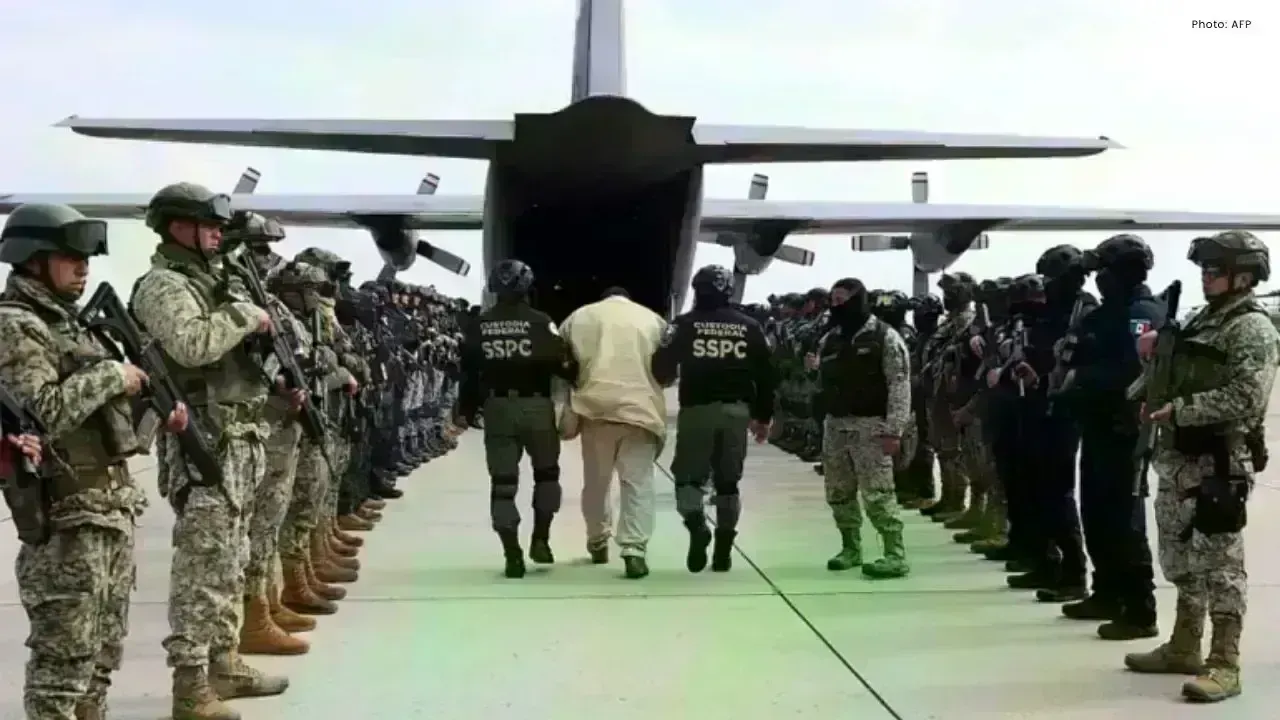
In a notable action, Mexico has transferred 37 more alleged members of drug cartels to the United States, reflecting its commitment to working with U.S. authorities in combating organized crime. This move comes at a time of heightened tensions regarding drug trafficking and security issues between the two nations.
Mexican officials have identified these suspects as high-risk individuals, strongly associated with prominent drug cartels. Under strict security measures, they were flown to various U.S. cities to face charges. With this latest batch, a total of 92 alleged cartel members have been sent to the U.S. in recent months.
The decision was made by Mexico’s security leaders to safeguard public welfare and curtail the influence of criminal organizations within the country. Authorities confirmed that these transfers were conducted in accordance with legal cooperation agreements between both nations, ensuring that the suspects would not face the death penalty in the U.S.
Following strong warnings from U.S. President Donald Trump regarding drug cartels’ threats to American security, he hinted at possible direct actions against these groups. However, Mexico has firmly opposed any military involvement on its territory, emphasizing that cooperation must uphold its sovereignty.
By facilitating the extradition of suspects, Mexico appears to endorse legal collaboration over conflict. Prosecutors believe that pursuing cartel leaders in U.S. courts could undermine criminal networks and hinder their operations from within Mexican prisons, where many remain influential.
Nevertheless, this decision has ignited discussions in Mexico, with some legal professionals and politicians questioning whether such transfers align with Mexican laws and due process. Concerns highlight that long-lasting strategies against crime also necessitate social development, robust institutions, and judicial reform.
Proponents assert that since drug cartels operate across borders, combating them demands joint responsibility. They contend that collaboration with the United States can mitigate violence, diminish drug trafficking, and enhance public safety in both countries.
Mexico’s leadership maintains that their primary aim is to combat organized crime while ensuring national autonomy. They stress that these measures form part of a comprehensive security strategy rather than being solely influenced by foreign pressures.
With drug trafficking impacting millions in North America, these recent transfers indicate the intertwined security fates of Mexico and the United States. While it remains uncertain if this strategy will yield enduring outcomes, it signifies a resolute fight against formidable criminal factions.


 English