Post by : Saif
Al-Najjar
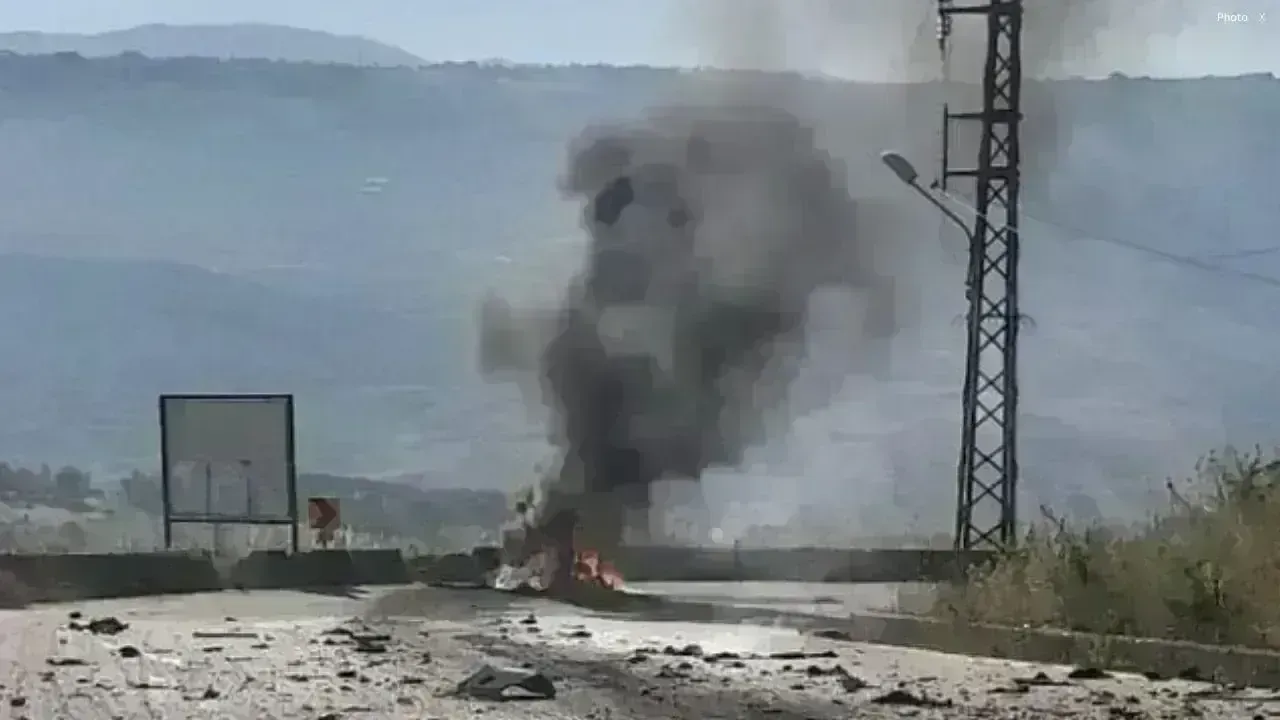
The Israeli military has confirmed it conducted an airstrike on a Lebanese army vehicle, describing its movements as “suspicious” within a combat zone near the border. This incident further complicates an already volatile situation along the Israel-Lebanon frontier, where military activity has notably escalated in recent weeks.
Military officials noted that the vehicle was monitored during operations in a high-alert area, where security is tightly controlled due to ongoing conflict. According to their assessment, the strike was executed after real-time evaluations aimed at neutralizing potential threats in the region.
While the Lebanese army has yet to provide a comprehensive response, this occurrence raises critical concerns regarding coordination, identification, and engagement protocols in sensitive border zones. Such clashes often provoke diplomatic anxiety, particularly involving military forces from neighboring nations.
The Israel-Lebanon border remains one of the most closely observed and tense regions in the Middle East. Frequent clashes, cross-border exchanges, and ongoing security operations contribute to instability, where minor incidents can quickly escalate into significant confrontations, given the presence of numerous armed groups.
This strike coincides with a period of heightened regional tensions. Various fronts in the Middle East are experiencing instability, compelling security forces to operate under increased alertness. Rapid military decisions are often informed by perceived threats, which might lead to misunderstandings or unintended repercussions.
Military analysts underscore the inherent complexity of border regions as combat zones. Unusual vehicle movements can easily be misinterpreted, particularly when communication between opposing forces is limited. This necessitates precise coordination and accurate identifications to avert escalation.
This event also emphasizes the ongoing challenge of sustaining stability in regions with multiple armed factions. In conflict areas, it becomes challenging to differentiate between civilian, military, and suspicious activities, intensifying the imperative for quick action while also raising concerns over accuracy and proportionality.
Incidents involving use of force generate significant international scrutiny. Governments and global organizations often advocate for restraint and thorough investigations whenever casualties or cross-border military actions occur, aiming to mitigate potential escalation and promote dialogue among involved parties.
The Israel-Lebanon border has experienced recurring cycles of tension throughout the years. Each side is burdened by security apprehensions regarding the other, with periodic skirmishes contributing to an unpredictable atmosphere. Smaller incidents persistently disrupt stability and sow mistrust even when large-scale conflicts are avoided.
This latest development may also influence ongoing diplomatic initiatives in the region. International mediators typically endeavor to defuse tensions and prevent localized incidents from spiraling into broader conflicts. However, military actions involving casualties complicate efforts to sustain calm and trust between the involved factions.
From a humanitarian angle, continued military engagements near border zones present dangers for both combatants and civilians alike, with communities nearby enduring uncertainties, disruptions, and safety concerns during periods of heightened alert. Long-term instability could undermine local economic activities and development.
This incident vividly illustrates how swiftly scenarios in conflict zones can transform. Even routine monitoring operations may provoke serious ramifications when perceived as threats. Therefore, efficient communication, monitoring systems, and established protocols are crucial to reducing the chances of misunderstandings.
As investigations and reactions unfold, the focus will be on how both sides navigate the aftermath of this strike. The potential for further escalation or renewed efforts in careful border security management will depend on diplomatic engagement and military restraint in the ensuing days.
Currently, the situation remains delicate, drawing keen attention from both military and political analysts regarding the developments along the Israel-Lebanon border.


 English