Post by : Saif
Al-Najjar
On Friday, Yemen’s ongoing crisis took a significant turn as the governor of Hadramout province outlined intentions for a “peaceful operation” aimed at retaking military positions from opposing factions. This initiative underscores the intensifying tensions within Yemen and the widening rift between its two principal regional supporters, Saudi Arabia and the United Arab Emirates.
Governor Salem Ahmed Saeed al-Khunbashi, who aligns with Saudi interests, emphasized that the operation would focus solely on military installations and should not be interpreted as an act of war. His declaration came following Yemen’s recognized government granting him comprehensive authority over military, security, and administrative operations within the province. Officials asserted the objective is to restore stability and order.
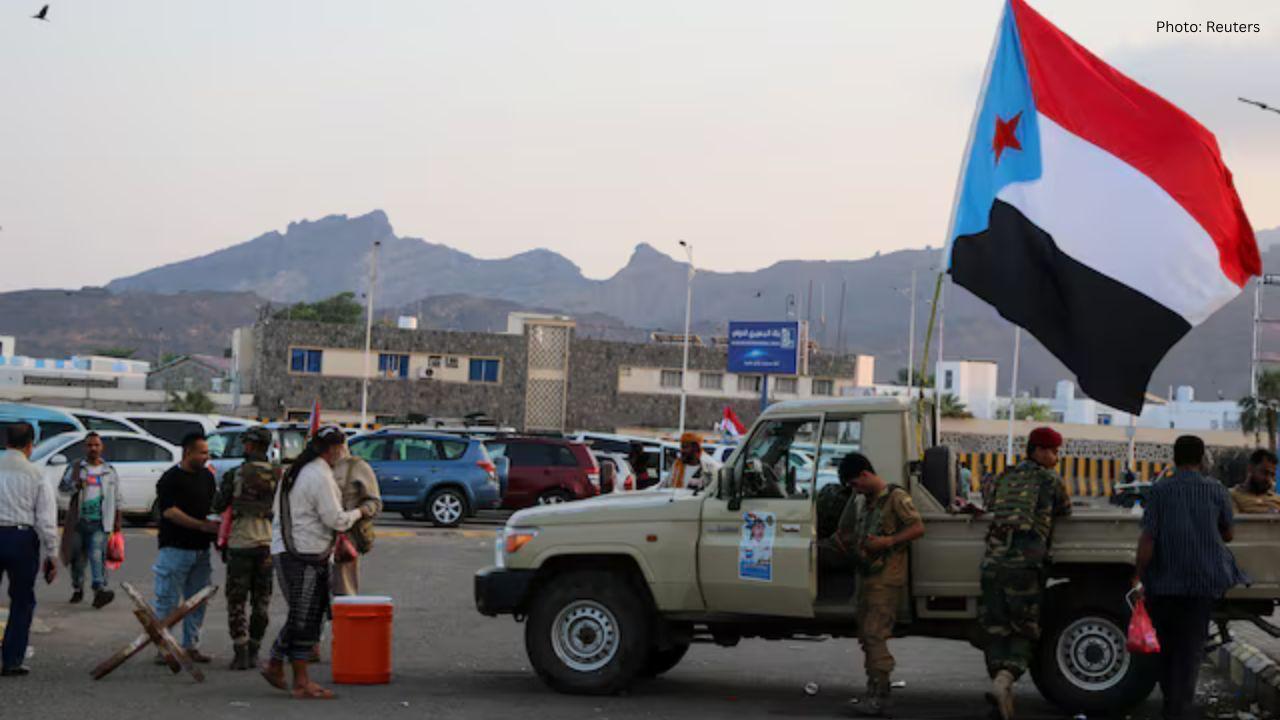
This operation primarily targets forces aligned with the Southern Transitional Council (STC), a group endorsed by the UAE advocating for southern secession. Recently, the STC has seized control of significant sections of southern Yemen, including strategic military locations. Saudi Arabia perceives this as a direct challenge to Yemen’s integrity and its own regional influence.
The evolving situation mirrors a more profound issue. Historically, Saudi Arabia and the UAE collaborated closely in Yemen; however, their partnership has deteriorated. Presently, they back opposing factions, and their discord has become more evident since late December. Recently, the UAE declared plans to withdraw its remaining troops from Yemen, following calls from Saudi-aligned factions for their departure.
The STC has yet to publicly respond to the announcement from Hadramout’s governor. Nonetheless, mounting tensions are already influencing everyday life. Operations at Aden International Airport were suspended following a conflict between Saudi Arabia and the STC. Saudi officials indicated that a plane carrying a Saudi delegation was refused landing rights. In contrast, the STC’s transport authorities claimed that Saudi Arabia imposed additional checks to obstruct flights.
Aden airport serves as a crucial point of connectivity for regions of Yemen not under Houthi control. The airport's closure has sparked concerns regarding travel, humanitarian aid, and access to the outside world for millions.
Yemen has endured prolonged years of conflict, famine, and fragmentation. Many citizens fear that new power struggles, even framed as “peaceful,” could foster further instability. As regional powers vie for control, it is everyday citizens who continue to bear the brunt of the consequences.
The upcoming days will reveal whether diplomatic efforts can ease tensions or if the frail peace within Yemen is on the brink of further turmoil.


 English