Post by : Shweta
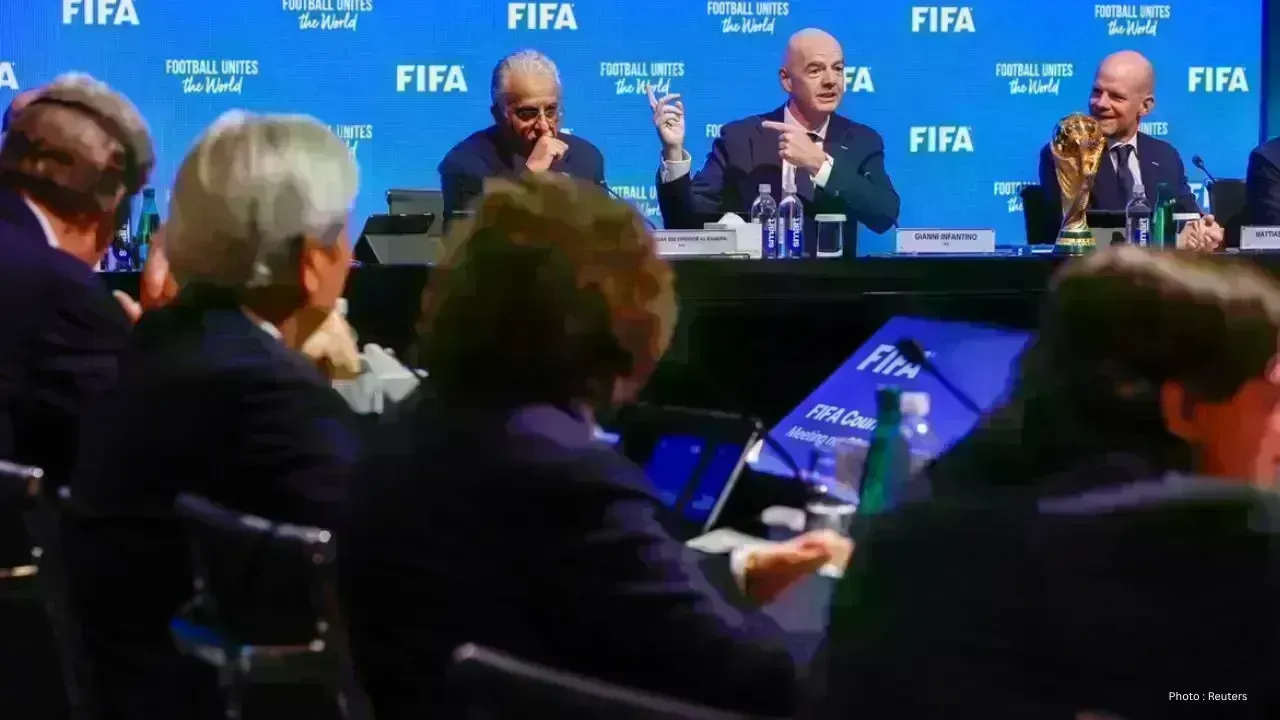
The FIFA Congress held recently in Vancouver has revealed significant friction within the global football community just weeks before Canada co-hosts the highly anticipated 2026 FIFA World Cup. The event gathered football officials globally but quickly became embroiled in political disagreements, governance issues, and uncertainties concerning vital matters linked to the forthcoming tournament.
Held at the Vancouver Convention Centre, the congress included delegates from FIFA's 211 member associations. Senior officials, federation representatives, sponsors, and organizers turned out in full force as momentum builds toward the joint hosting of the World Cup by Canada, the US, and Mexico.
While FIFA branded the event as a showcase of international football solidarity, behind-the-scenes tensions arose over governance reforms, tournament expansion, human rights, and financial disputes. Many football officials expressed worries regarding the impact of global political issues on the preparations for what is set to be the largest World Cup to date.
Key discussions during the congress highlighted escalating concerns regarding FIFA's growing commercial might and its decision-making dynamics under President Gianni Infantino. Critics from various national associations voiced that the leadership has become overly centralized, restricting the influence of smaller federations on major tournament choices.
Human rights debates also took center stage, with advocacy groups pressuring FIFA to address labor rights, migrant worker protections, and discrimination, demanding enhanced transparency and accountability standards leading to the 2026 World Cup.
Political discord among member nations reportedly intensified tensions during the congress. FIFA and other international sporting bodies increasingly grapple with the complexities of neutral governance amid global political strife, acknowledging that geopolitical divides are becoming intertwined with significant sporting events.
Meanwhile, uncertainty surrounding the Vancouver Whitecaps added another layer of tension. Reports of a bid to relocate the team to Las Vegas prompted protests outside the venue, with supporters rallying under "Save the 'Caps" urging stakeholders to safeguard the soccer scene in Vancouver as the World Cup approaches.
British Columbia's Premier David Eby reaffirmed the government’s commitment to retaining the Whitecaps in the city, emphasizing the necessity of a robust soccer infrastructure in readiness for World Cup matches. This potential relocation controversy heightened the atmosphere of tension during the congress.
Discussions surrounding security, infrastructure, and financial planning for the 2026 tournament also dominated conversations, as the event marks a record expansion to 48 teams, with matches scheduled across various cities in Canada, the United States, and Mexico. Organizing entities face formidable logistical challenges related to travel coordination, stadium operations, and crowd management.
Some officials raised alarms on the rising financial burdens associated with hosting significant sporting events, criticising FIFA for exerting tremendous financial pressure on host cities while exercising stringent control over tournament sponsorships, branding, and revenue allocation.
Regardless of the internal tensions, FIFA officials maintained that preparations for the 2026 World Cup are firmly on track. Gianni Infantino acknowledged the collaborative spirit among the three host nations, heralding the upcoming event as a landmark opportunity for football growth in North America and expected economic and tourism boons.
Canada is set to host matches in cities like Vancouver and Toronto during the tournament, while the US will be the primary venue for most games, including the final. Mexico will also partake in hosting responsibilities across several locations, marking a historic first in FIFA World Cup history with three nations jointly organizing.
However, analysts note that the divisions illuminated during the Vancouver congress reflect the complex interconnections modern international football has forged with politics, commerce, social concerns, and global power dynamics. What once was merely a sporting occasion now carries substantial diplomatic, economic, and cultural importance on a worldwide scale.
As the countdown for the 2026 World Cup continues, FIFA faces increasing pressure to navigate internal disputes while keeping the tournament focused on the spirit of football rather than controversy. The congress in Vancouver underscored both the anticipation for the upcoming World Cup and the challenges ahead that may shape the event.


 English