Post by : Meena
Hassan
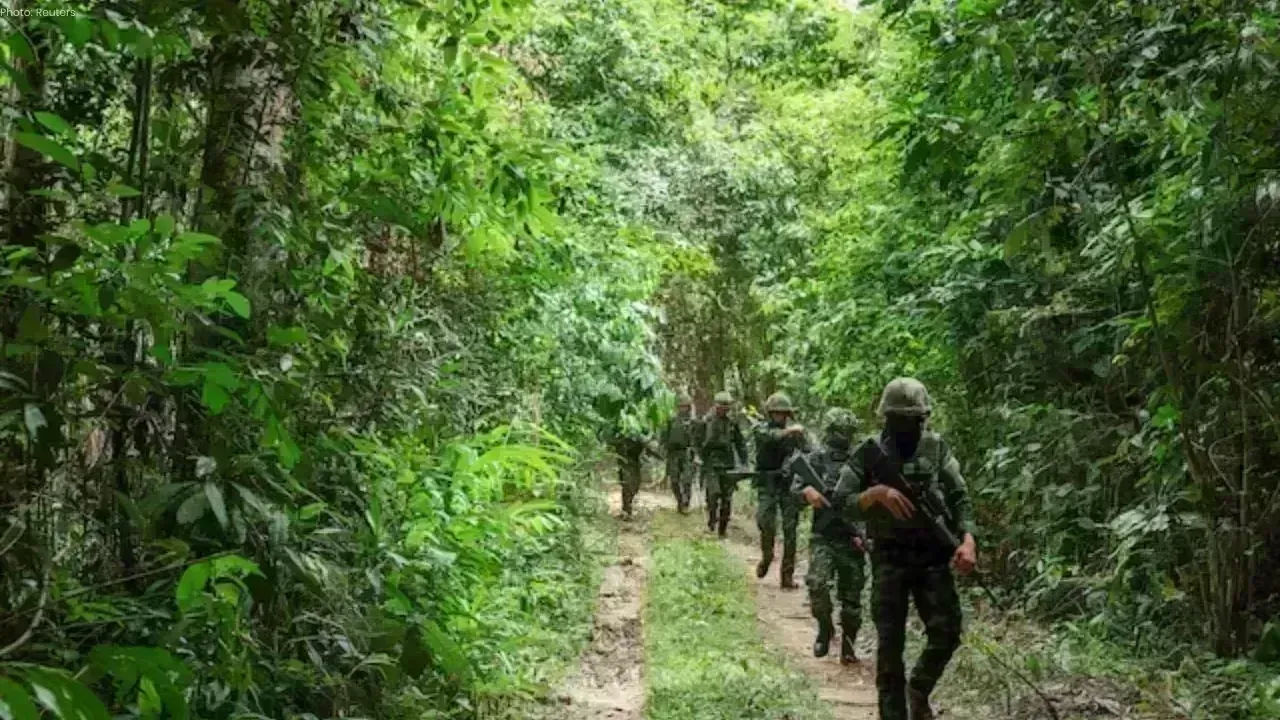
The Thai military continues to occupy areas of Cambodia, creating blockades with barbed wire and shipping containers. This situation poses a threat to the peace treaty established between the two nations, which faced two rounds of conflict last year. Cambodian Foreign Minister Prak Sokhonn has reported that approximately 4,000 families are unable to return to their homes along the border due to the presence of Thai forces, despite a ceasefire agreement reached in December.
In a recent interview from Phnom Penh, Minister Sokhonn highlighted four specific locations where Thai soldiers have entered Cambodian territory. While he noted that the current environment is stable, he expressed concerns about lingering risks, urging Thailand to adhere to the peace agreement.
In response, the Thai military and government dismissed Cambodia's assertions, contending that their personnel are abiding by agreed protocols and not encroaching on land.
The December fighting was marked by the use of fighter jets, rocket fire, and artillery, following previous clashes in July that concluded with intervention from U.S. President Donald Trump. The December conflict resulted in 101 fatalities, displacing over half a million individuals from both sides, as part of a longstanding border dispute.
Cambodia has requested a meeting of the Joint Boundary Commission to address the border disputes, although Thailand has yet to affirm their participation. Sokhonn emphasized the need to resolve the issue of occupied areas to facilitate the safe return of residents.
Thailand's foreign ministry has indicated that discussions are being arranged for after the new government forms following the February 8 election. They reiterated their commitment to dialogue and expressed intent to renew the Joint Boundary Commission soon.
The peace agreement reached on December 27 stipulated that neither side would deploy additional troops to the border and emphasized the repatriation of displaced individuals. Sokhonn criticized the violence for inflicting severe damage on people’s lives, as well as infrastructure including schools, roads, and temples.
While Trump facilitated the cessation of fighting in July and supported a ceasefire in October, immediate resolutions for the December conflict were not achieved. Peace initiatives also involved special envoys from China sent to both nations in late December alongside Trump and Malaysian Prime Minister Anwar Ibrahim.


 English