Post by : Shakul
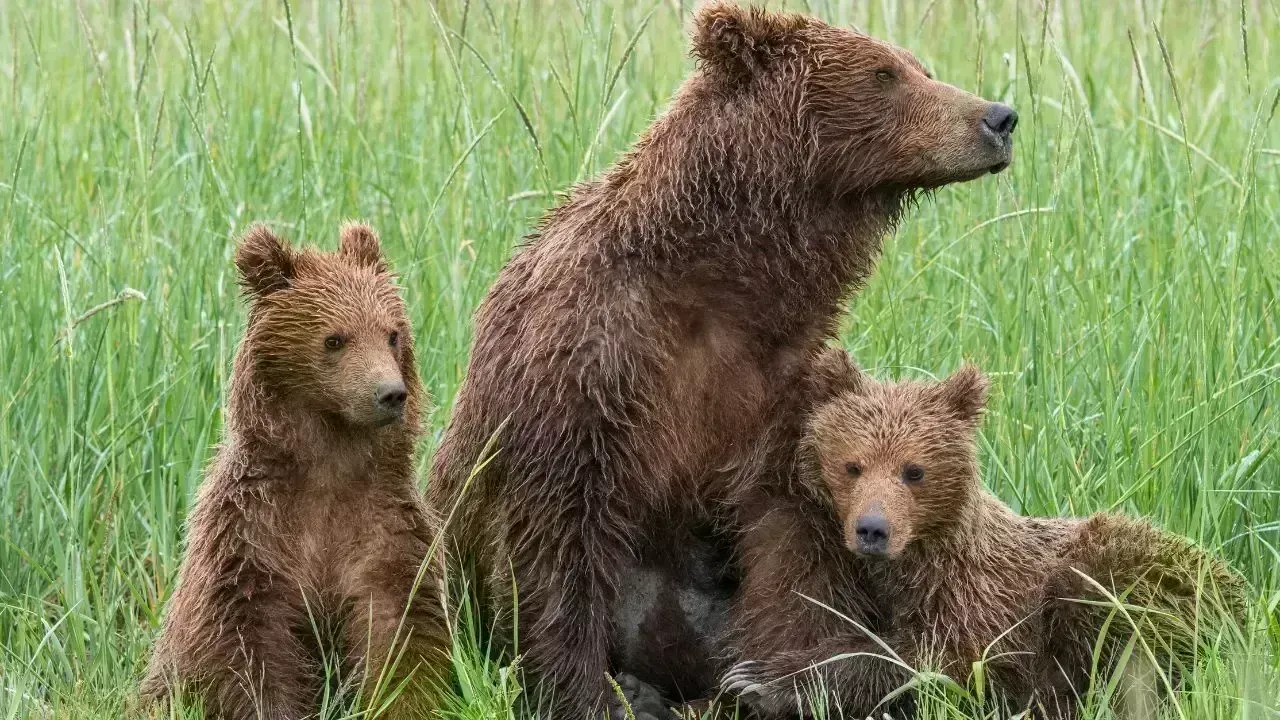
A significant wildlife sighting has come to light in Himachal Pradesh's Kinnaur district, where a female Himalayan brown bear and her two cubs were filmed inside the Rakcham-Chitkul Wildlife Sanctuary near the India-China border. Experts and conservationists hailed the incident as a key moment for biodiversity monitoring and conservation efforts in the Himalayan area.
The footage was captured by a dedicated team from the forest department, which included Block Forest Officer Santosh Kumar Thakur along with forest guards Chhayanand, Akshay, and Pawan Kumar. Forest volunteer Alpana Negi also contributed. Renowned ornithologist and naturalist Gary Bhatti, along with wildlife researchers Dr Bishwarup Satpati and Dr Rahul Deb Mandal, further substantiated the sighting.
The Himalayan brown bear ranks among India's rarest and most protected wildlife. It enjoys the highest legal protections under Schedule I of the Wildlife Protection Act of 1972, primarily inhabiting the high-altitude regions of Himachal Pradesh, Jammu and Kashmir, and Uttarakhand across various protected wildlife zones.
Experts pointed out that such sightings are highly unusual because Himalayan brown bears are inherently shy and solitary. Unlike Asian black bears, which are often spotted near human habitats at lower altitudes, brown bears tend to remain at elevations above 2,500 meters in secluded mountainous areas. They mostly exist solitarily unless they are breeding or nurturing cubs, making the sighting of a mother with two cubs particularly rare.
The Rakcham-Chitkul Wildlife Sanctuary, nestled in the isolated Himalayan region of Kinnaur, is celebrated for its delicate ecosystem and vibrant biodiversity. Wildlife experts see the bear family's presence as a positive sign that the sanctuary has been able to sustain a healthy ecological balance, despite challenges stemming from climate and environmental pressures in mountainous terrains.
Researchers note that Himalayan brown bears generally weigh between 100 and 150 kilograms, and they can stand nearly six feet tall when upright. Their diet primarily consists of herbs, roots, plants, and berries, with a minor proportion of meat. They are also considered less aggressive and more gentle than many other types of large bear species.
This sighting has sparked enthusiasm among wildlife enthusiasts and conservation organizations throughout India. Environmental advocates assert that rare observations like this one strengthen the call for protecting endangered Himalayan wildlife and preserving natural habitats in sensitive border regions.


 English