Post by : Shakul
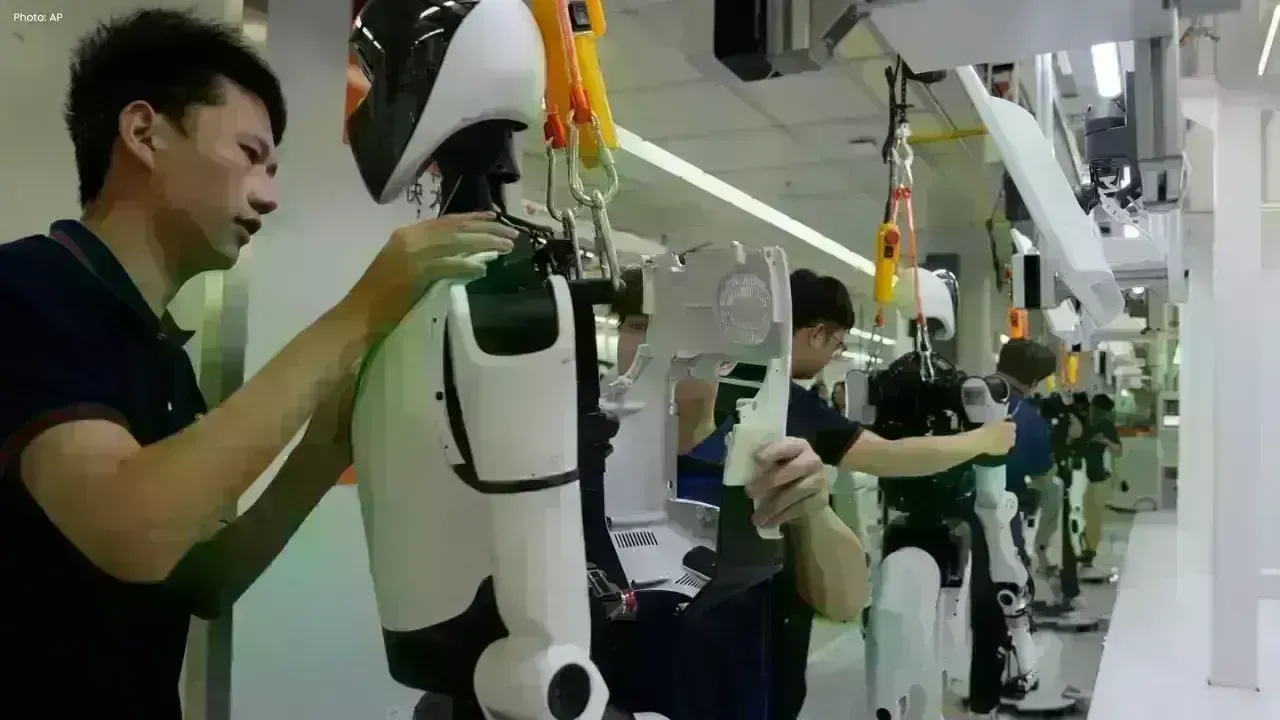
The humanoid robotics sector in China is witnessing remarkable growth, establishing the nation as a leader in robot manufacturing. While companies in China are showing strong technological advancements and have secured numerous orders, experts indicate that the crucial hurdle lies in cultivating enough demand to align with the soaring production capabilities.
Demonstrations across China are illuminating the abilities of humanoid robots, showcasing tasks like preparing coffee, assisting visitors, sorting goods, managing traffic, and providing customer service. These displays reflect the nation's goal to dominate a market that experts estimate could reach trillions of dollars in the upcoming years.
Chinese robotics giants are heavily investing in next-gen AI-powered robots. Innovators like Matrix Robotics and EngineAI have unveiled humanoid robots capable of executing diverse commercial and industrial tasks. Backed by robust manufacturing infrastructures and governmental support, these firms are accelerating production at a rate that outpaces many global rivals.
Nonetheless, despite impressive technological strides, professionals express concerns that most humanoid robots fall short in real-world usability. While many operate effectively in structured environments, they often struggle with the unpredictability present in homes, factories, and public areas. Consequently, the anticipated large-scale commercial integration is progressing slower than expected.
Analysts observe that, although China leads in global humanoid robot exports, a considerable portion of transactions arises from research bodies, state-owned enterprises, and experimental initiatives rather than a broad consumer base. Factors like high production costs, maintenance needs, and limited operational adaptability inhibit broader industry implementation.
The Chinese government recognizes robotics and AI as pivotal sectors for future economic advancement. Significant investments, supportive policies, and ongoing technological innovations have afforded domestic manufacturers a competitive edge. Currently, Chinese companies represent the majority of global humanoid robot exports and continue to launch increasingly cost-effective models.
Looking to the future, industry experts are optimistic that advancements in AI, data analytics, and machine learning will likely enhance robot capabilities and lower costs. As the technology evolves, humanoid robots may become a common sight in logistics, factories, healthcare facilities, and homes. However, mass adoption hinges not just on robust manufacturing but also on demonstrating that these robots can add tangible value to everyday tasks.


 English