Post by : Shweta
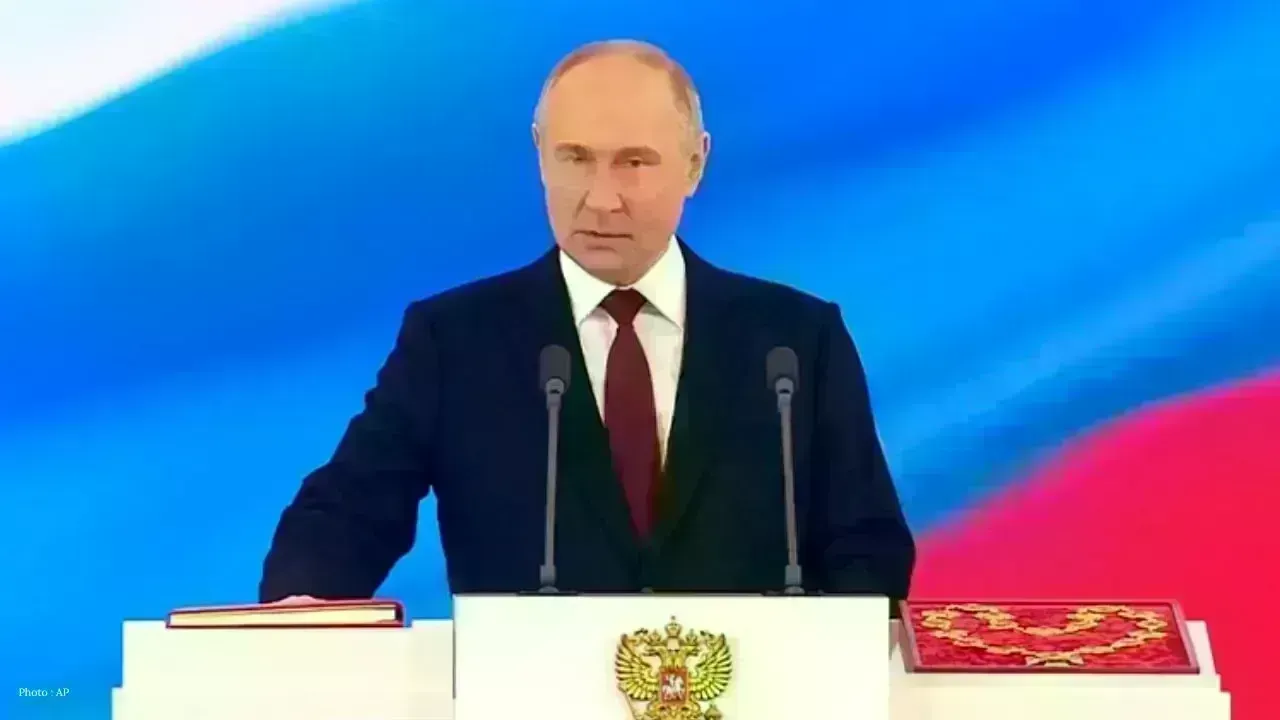
In a significant move, Russia has legislated to allow banks and financial institutions the authority to manage their own drone defense systems as part of heightened security measures against rising aerial threats. As the nation grapples with increasing drone attacks aimed at infrastructure, government facilities, and economic hubs amid the ongoing Ukraine conflict, this law serves as an essential step towards safeguarding critical assets.
The newly enacted legislation permits banks and specific financial entities to employ specialized technologies designed to counter potential drone incursions at their premises, including offices, data centers, and other vital locations. Lawmakers emphasized that this initiative aims to bolster national security and shield crucial financial services from aerial threats.
The law empowers sanctioned institutions to detect, track, and neutralize unauthorized drones operating in proximity to their secured areas. This may involve the use of various anti-drone measures like electronic jamming, signal interference technologies, radar systems, and other defensive apparatus directed at intercepting drones before they can reach sensitive infrastructures. Only licensed and government-approved entities will be allowed to deploy these systems, strictly regulated for security compliance.
Russian lawmakers assert that the contemporary threats posed by drones have raised alarms for both public institutions and private sectors. In recent months, Russia reported numerous drone incidents targeting airports, industrial facilities, and economic enterprises across numerous regions. Concerns about potential drone-related cyber disturbances have heightened among financial bodies, underscoring the essential need for robust defensive strategies.
Proponents of this legislation contend that financial entities are integral to ensuring economic stability and should possess appropriate means to fortify themselves against evolving security challenges. Government officials clarified that empowering banks with the capacity to manage their own drone defenses can lead to faster response times while alleviating the burden on state security forces during critical situations.
This legislative action aligns with Russia's larger initiative to strengthen its domestic security framework concerning drone technology. Additional restrictions on drone activities have already been imposed in various regions, alongside reinforced air defense measures surrounding significant governmental and industrial sites. Experts posit that the rising prevalence of drones in modern warfare necessitates a reevaluation of security protocols for both civilian and commercial infrastructures.
Nevertheless, some analysts express concern regarding the implications of private entities operating sophisticated defense systems. Detractors caution that anti-drone technologies might disrupt communication networks or pose risks to civilian air travel if not carefully managed. Others contend that the escalating reliance on drone defensive strategies exemplifies a rapid evolution in security methodologies worldwide.
Officials in Russia are adamant that these systems will be structured under stringent governmental control and oversight. They assert that operators must obtain special permissions and technical endorsements prior to utilizing anti-drone technologies. The primary focus of this legislation remains the enhancement of protective measures for vital economic institutions while addressing the risks associated with unauthorized drone activities.
This law underscores Russia's intensified commitment to bolstering internal security in light of the evolving dynamics of drone technology in global conflict scenarios. Analysts anticipate heightened investments from various nations and private sectors in anti-drone systems in the forthcoming years as both governments and enterprises gear up for emerging technological threats.


 English