Post by : Shweta
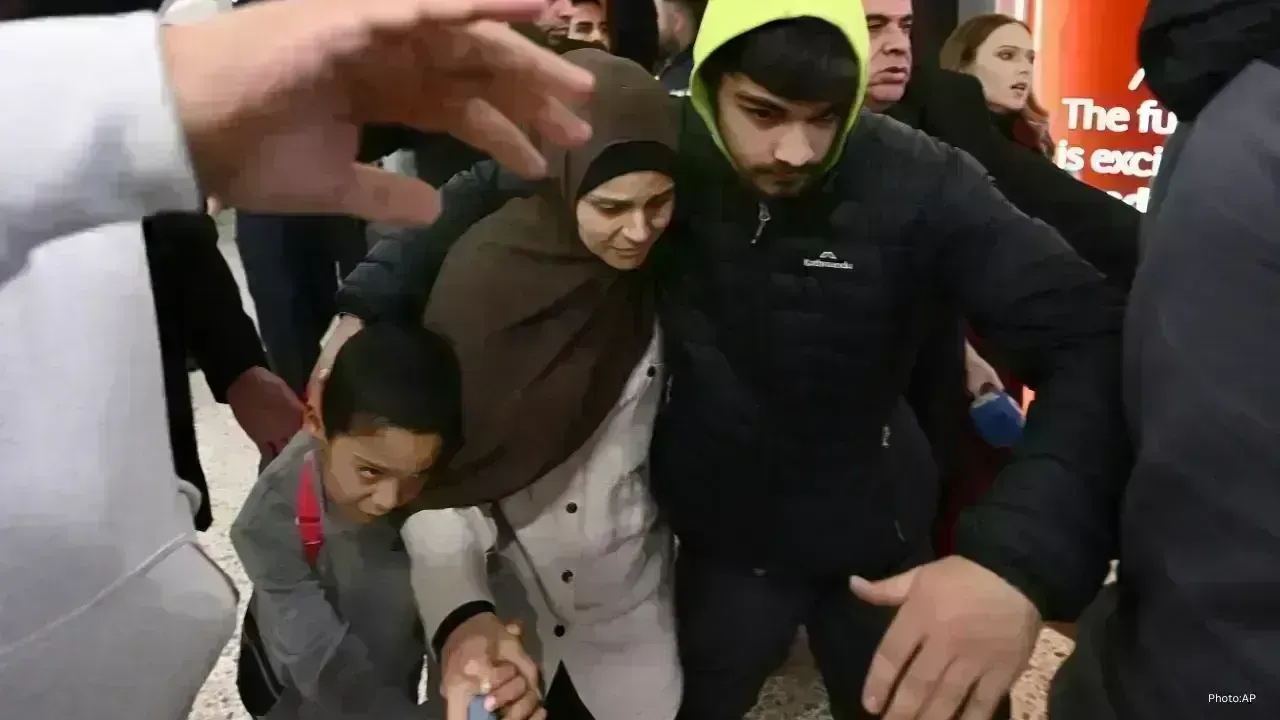
In a significant move, two aircraft have brought 19 Australians connected to the Islamic State (IS) group back to Melbourne and Sydney as part of a new government initiative to repatriate citizens from Syrian detention camps. Officials have confirmed that this group comprises women and children related to former IS fighters who have spent years in camps governed by Kurdish forces.
The Australian government stated that the repatriation was executed under stringent security protocols and with the help of intelligence, counterterrorism units, and international partners. All returning adults will undergo thorough security assessments and may face legal action in accordance with Australian law.
Most of the children returning to Australia were born during the ongoing conflict in Syria or Iraq. Various human rights organizations have long urged that children in Syrian camps be repatriated, citing their difficult living conditions, which offer limited access to healthcare, food, and education.
Home Affairs officials characterized this operation as both a humanitarian act and a national security measure. They noted that leaving these citizens in unstable camps could pose long-term risks both to security and humanitarian efforts. The government emphasized that children should not endure suffering due to their parents' choices.
The returnees were taken from facilities like al-Hol and Roj, where many relatives of former Islamic State members remain imprisoned. Aid agencies have long criticized these camps for being overcrowded and perilous, fraught with risks of radicalization, violence, and health issues.
Upon arrival, the Australian Federal Police and intelligence services monitored the operation closely. They indicated that returning adults are subject to investigations regarding terrorism-related offenses or links to extremist groups, and national security measures will persist post-repatriation.
This repatriation has sparked a national debate in Australia. Some lawmakers support the initiative, claiming that it is Australia’s duty to bring its citizens home while effectively managing potential security challenges, while others express concern over public safety and the risk of radicalization.
Human rights advocates have responded positively to the repatriation, criticizing the slow action of many Western nations in returning their citizens from Syrian camps. Advocacy groups assert that the lengthy detainment of women and children without legal proceedings poses serious humanitarian risks and heightens the chance of long-term psychological trauma for young individuals.
The Islamic State group previously held significant control over vast regions in Iraq and Syria but faced military defeats from international coalitions. Still, thousands related to or supportive of IS remain in detention. There are ongoing discussions among global governments on how best to address this situation involving these individuals.
Security analysts highlight the complexities of repatriation initiatives, stressing the need for a balance between humanitarian obligations and counterterrorism responsibilities. They caution that individuals linked to extremist organizations require extended monitoring, rehabilitation, psychological support, and effective community reintegration.
Australian officials have pledged to offer health evaluations, counseling, and support services for the repatriated children and families while continuing collaboration with international entities to surveil any emerging extremist threats associated with former IS networks.
This operation positions Australia among several Western nations beginning to repatriate citizens from Syrian detention facilities. Experts project that as international pressures mount, further repatriation efforts may occur to address the ongoing humanitarian and security crisis tied to families linked to the Islamic State group.


 English